
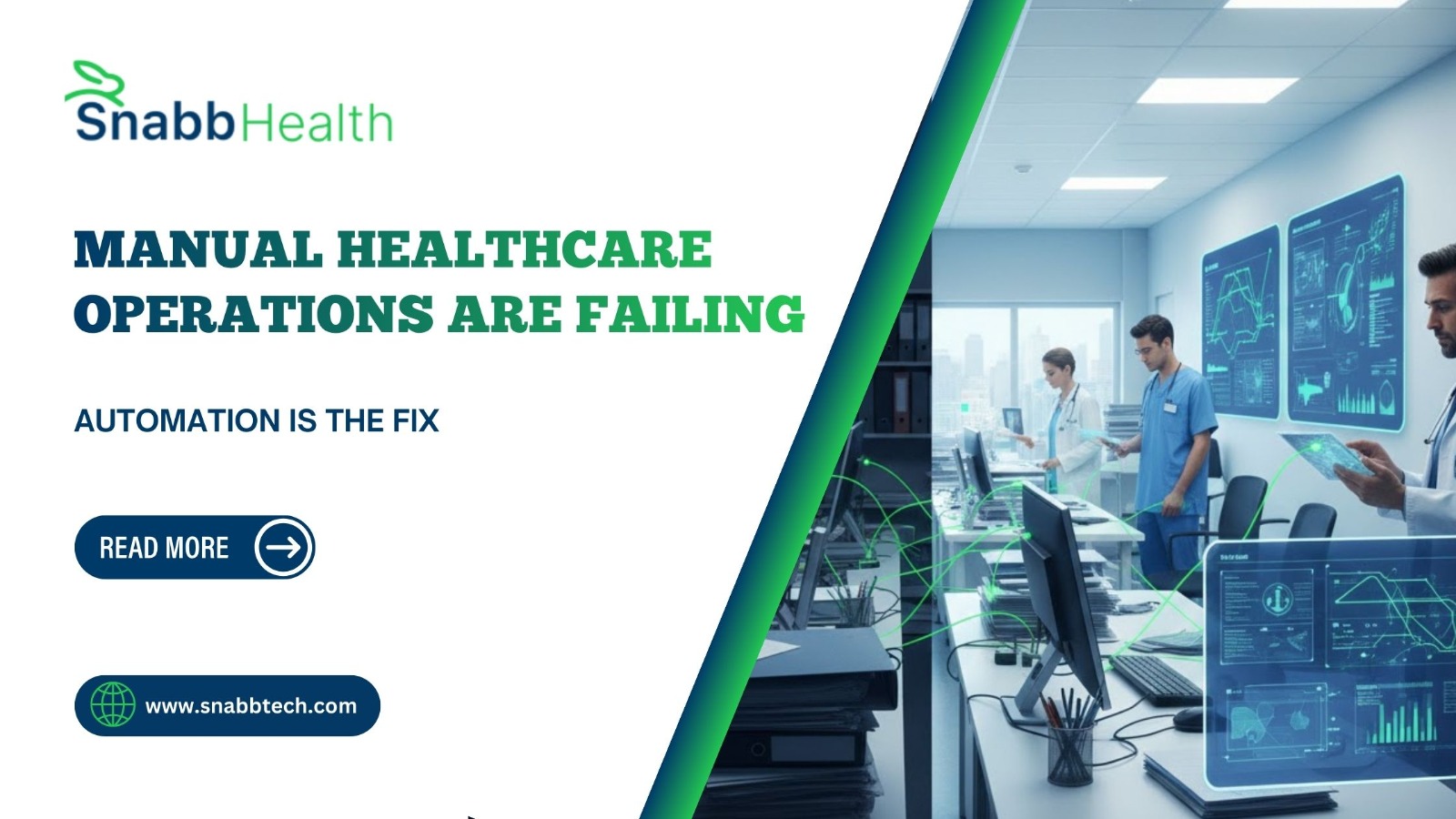
Picture yourself at a clinic waiting 20 minutes for your appointment because the receptionist is swamped with paperwork. Plus, when your doctor accesses your record, they are looking at multiple spreadsheets, involving several different systems, trying to put together your data, which is disjointed, unreliable, and error-prone at best. This type of experience isn’t unusual in healthcare. In fact, it’s typical of how healthcare operates today.
It is paradoxical that one of the most important industries in the world, healthcare, still relies on manual processes to run its operations. While your smartphone can display current weather conditions more accurately than any hospital can determine their patients’ needs, there has never been a bigger discrepancy between what we expect from healthcare and what we actually get.
Why Manual Healthcare Operations Are Failing
Healthcare is fundamentally about people treating illnesses, saving lives, and improving quality of life. Yet, when the backbone of the system operations relies heavily on human collation, duplication, and transcription of data, errors and inefficiency multiply.
Human Error Isn’t an Exception, It’s the Norm
- Manual data entry leads to transcription errors.
- Misfiled documents create information gaps across departments.
- Lost forms and miscommunication delay treatments.
In one study, nearly 60% of medical errors were linked to poor information management and administrative faults. This isn’t an indictment of staff, it’s a structural flaw in the system.
Delays Affect Care Delivery
Waiting for records to be retrieved, forms to be processed, or results to be communicated isn’t just inconvenient, it’s dangerous. The time that clinicians spend chasing information is time taken away from patients.
Cost Overruns Are Embedded in Manual Processes
Unnecessary repeat tests, billing errors, and staffing overheads inflate operational costs. A system that thrives on manual checks and balances inherently suffers from inefficiency and passes that expense back to providers and patients alike.
The Case for Automation in Healthcare
Automation isn’t a flashy tech buzzword. It’s a practical, measurable path to operational integrity and clinical reliability.
Enhanced Accuracy
Automated systems eliminate repetitive manual tasks like data entry, scheduling, and billing. When systems communicate directly, the risk of transcription error collapses.
Real-Time Data = Better Decisions
Automation can pull and present data in real time. Clinical teams access patient histories, treatment plans, and diagnostics instantly, with no waiting.
Scalability and Standardization
As healthcare networks expand, manual processes buckle. Automation introduces consistency across locations and workflows, making scale both manageable and dependable.
Improved Patient Experience
Patients benefit from shorter wait times, fewer redundant forms, and faster results. Healthcare becomes more responsive, not just reactive.
Common Concerns About Healthcare Automation
Despite the benefits, many organizations hesitate. Let’s unpack the most frequent concerns.
Will Automation Replace Human Jobs?
No automation reallocates human effort from repetitive tasks to higher-value work. Administrators become coordinators and problem-solvers, not data clerks.
What About Security and Privacy?
Reputable automation platforms deploy end-to-end encryption, authentication controls, and audit tracking. With proper governance, automated systems can be more secure than manual logbooks or spreadsheets.
Integration With Legacy Systems
Healthcare organizations often operate a patchwork of outdated software. Modern automation tools are designed to bridge these gaps with APIs and middleware, enabling seamless interoperability without ripping and replacing existing systems.
The Future of Healthcare Operations Is Automated, and It Starts Now
Precision, responsiveness and clarity of information are all essential characteristics of Healthcare. Due to their inability to deliver at scale, manual processes simply cannot keep up with these characteristics of Healthcare. Therefore, Automation is not merely an optional improvement but rather a fundamental requirement if we want to achieve long-term delivery of care in the Healthcare industry.
If your organisation has the desire to make the transition from manual and error-riddled operations to those which are trustworthy and operate through automatic workflows, look no further than SnabbTech as your source of Supply Chain Automation Solutions built specifically for the needs of healthcare.
Our solutions provide the following:
– Holistic Automation Across both Administrative & Clinical Workflows.
– Enable Real-Time Access to Data & Interoperability.
– Provide Secure, Compliant Platforms Specifically Designed for Use within a Healthcare Environment.
Automation is more than just an upgrade in technology, it is a key component of any strategic initiative related to business process improvements. Given that this Industry relies heavily on time-sensitive and detail-oriented operations, the transition from manual to automated operations is a vital step that all Healthcare organisations must take now. The automated future of Healthcare starts with the innovative solutions from SnabbTech that support this transition.