
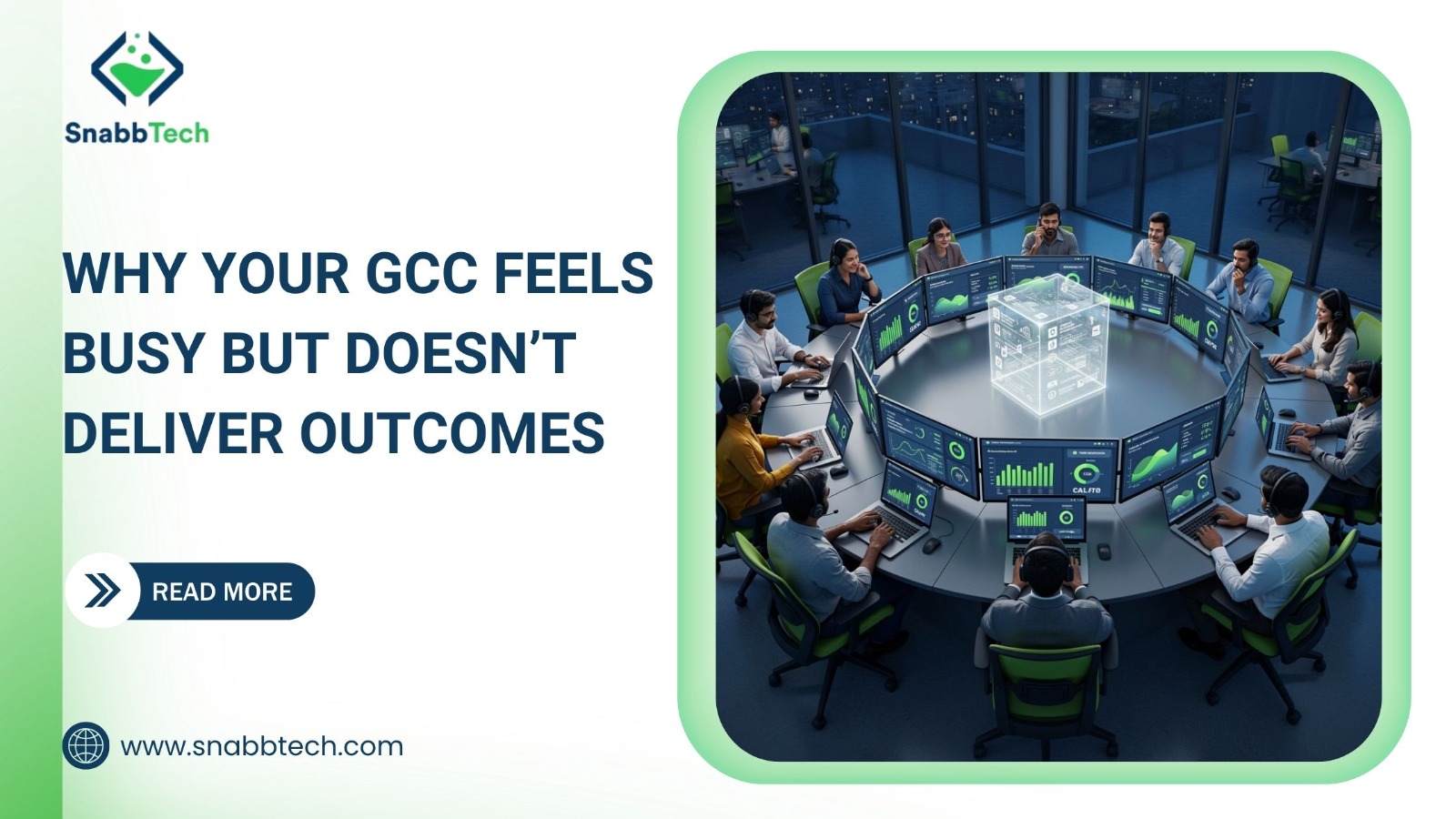
There’s a strange paradox inside many Global Capability Centers (GCCs): calendars are packed, dashboards look active, teams are constantly “on”, yet meaningful outcomes feel… distant.
No one’s idle. But somehow, progress isn’t compounding. This isn’t a people problem. It’s a systems problem.
The Illusion of Productivity
Most GCCs optimize for activity visibility, not outcome clarity.
Which means:
- More meetings = perceived alignment
- More tickets closed = perceived progress
- More reports = perceived control
But none of these guarantees real business impact.
You end up with a machine that’s constantly running, but not necessarily moving forward.
Where It Breaks Down
Here’s what’s typically happening beneath the surface:
- Misaligned KPIs
Teams are measured on output, not outcomes. Shipping faster doesn’t matter if you’re shipping the wrong things. - Fragmented Ownership
Work is distributed across functions, vendors, and geographies, but accountability is not. Everyone contributes, no one owns the final outcome. - Over-Engineering Processes
Layers of approvals, reporting structures, and compliance loops slow down decision-making.
Speed dies quietly in the process. - Lack of Decision Intelligence
Data exists, but it’s rarely actionable. Dashboards show what happened, not what to do next. - Talent Underutilization
Highly capable teams get stuck executing repetitive or low-impact tasks instead of solving core problems.
The Real Cost of “Busy”
When a GCC operates like this, the impact isn’t just inefficiency, it’s strategic drag:
- Innovation cycles slow down
- Business teams lose trust in delivery
- Costs rise without proportional value
- Leadership starts questioning the GCC’s purpose
And over time, the GCC shifts from being a growth engine to a support function.
What High-Performing GCCs Do Differently
They don’t focus on doing more. They focus on doing what matters.
They rewire around outcomes, not activity:
- Outcome-first KPIs: Every initiative ties back to measurable business impact
- Clear ownership models: One team owns the outcome end-to-end
- Decision velocity: Fewer layers, faster calls, tighter feedback loops
- Integrated data systems: Insights that guide decisions, not just report history
- Capability leverage: Talent is aligned to high-impact, strategic work
In short, they reduce noise and increase signal.
Where SnabbTech Comes In
Most GCCs don’t lack talent or intent, they lack structural clarity.
This is where SnabbTech steps in.
Instead of adding more tools or processes, SnabbTech helps GCCs:
- Identify where the activity is disconnected from outcomes
- Redesign workflows around measurable business goals
- Enable faster, data-backed decision-making
- Align teams, systems, and leadership around what truly drives impact
The shift is subtle but powerful: From “Are we busy?” to “Are we moving the needle?”
The Bottom Line
A busy GCC can feel productive.But only an outcome-driven GCC creates real value. If your teams are constantly working but results feel underwhelming, it’s not a capacity issue, it’s a clarity issue.
And clarity, when done right, compounds faster than effort ever will.