
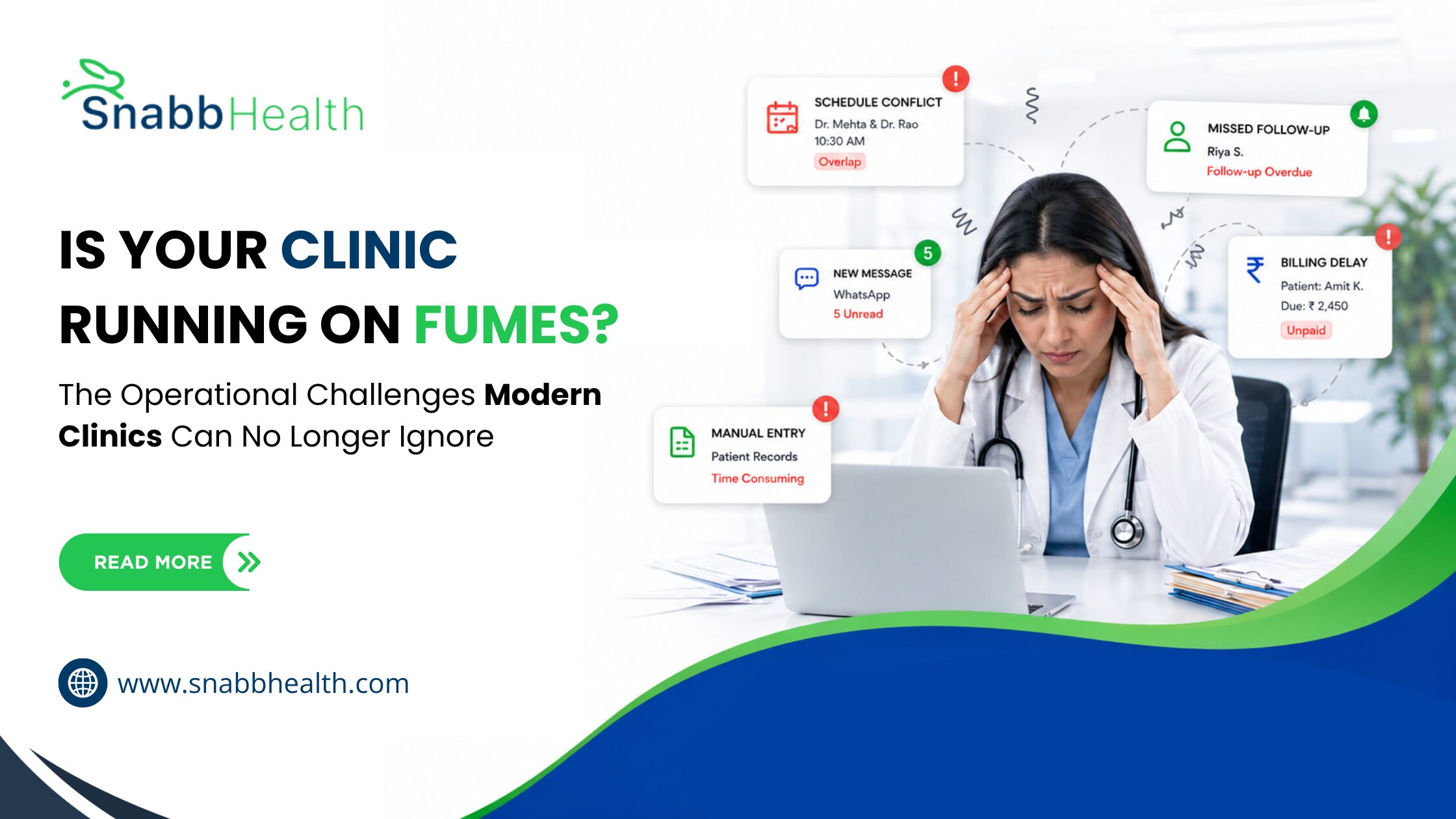
The Operational Challenges Modern Clinics Can No Longer IgnoreLonger Ignore
Most clinic owners didn’t get into healthcare to manage spreadsheets. Nobody did. But somewhere between the first patient and the fiftieth, the admin quietly takes over and before long, half the day is gone before anyone’s actually done the work they trained for.
That’s not a people problem. It’s a systems problem. And it’s one a lot of clinics are sitting with right now, hoping it doesn’t get worse.
It usually does.
The Part Nobody Sees
Patients experience a clinic as a consultation. Maybe a waiting room, maybe a follow-up text. What they don’t see is everything that happens to make that appointment exist the booking calls, the reminder that didn’t go out, the receptionist juggling three conversations at once, the doctor who walked in without the right records because they were in a different folder on a different system.
That invisible layer is where most clinics are actually struggling. Not in the consulting room. In the gap between when a patient decides to book and when they actually sit down with a doctor.
What’s Breaking Down
The honest version of this isn’t dramatic. It’s just a list of small things that compound:
- Appointments get double-booked because two people updated the calendar without checking
- A patient doesn’t show because nobody sent a reminder or sent it too late
- The front desk spends 40 minutes on scheduling calls that a booking link could handle in two
- Patient notes are split across a paper file, an old system, and someone’s memory
- A follow-up slips through because it was in a WhatsApp thread that got buried
- No-shows pile up and there’s no clean process for filling the gap
None of these are crises. That’s partly why they don’t get fixed each one feels manageable. But they don’t stay small. A clinic running fine at 30 patients a week starts buckling at 60, not because it hired bad people, but because the processes underneath never scaled.
The Appointment Problem Specifically
Scheduling is where most of the damage happens, and it’s the part that looks simplest from the outside.
Every manual booking is someone’s time. The call, the check, the confirmation, the calendar update. And somewhere in that chain, things go wrong because chains always have weak links. Then do it again when the patient reschedules. Then again when they cancel the morning of.
One mistake in that chain costs more than it looks:
- An unfilled slot is revenue that’s just gone it doesn’t come back
- A patient who waited too long for a fix to a scheduling error remembers that
- Staff time spent correcting the error is staff time not spent on anything else
- The doctor’s morning gets disrupted before it even starts
No-shows sit on top of all this. Every empty slot is a cost the overhead was already committed. Most clinics are still chasing patients with manual reminder calls, which are inconsistent at best and frequently skipped when the front desk is already stretched. Automated reminders via SMS or WhatsApp aren’t a luxury feature. They’re just the minimum infrastructure a clinic needs to stop bleeding appointments.
Communication That Goes Nowhere
Patients don’t pick one channel and stick to it. When everything runs on phone calls, a booking isn’t just a booking it’s a phone call, a calendar check, a confirmation, and a silent prayer that nobody else just filled the same slot. Multiply that by thirty patients a week and someone’s entire morning is gone before lunch.
- Different staff give different answers because nobody has the full picture
- Messages get missed because they came through a channel someone doesn’t check
- Follow-ups fall through because they were in a thread that got buried under other conversations
- Patients feel ignored even when the clinic is genuinely busy trying to help them
A centralized system one place where every patient interaction lives cuts most of this out. Not because it’s fancy, just because it stops the same information from existing in five different places at once.
Records Nobody Can Actually Find
A doctor walking into a consultation without knowing the patient’s history isn’t a failure of medicine. It’s a failure of recordkeeping. But in clinics still running on paper files or two disconnected systems, it happens regularly. Someone has to hunt for the file, log into something else, or just ask the patient to repeat everything again.
That slows every consultation. It also introduces real risk a missed allergy, an outdated prescription, a gap in history that nobody caught because the information was technically in the system, just not findable in the 90 seconds before the appointment started.
Organized, accessible digital records aren’t an upgrade. They’re the floor a clinic needs to function without making avoidable mistakes.
What It Does to Staff
Healthcare workers are already stretched. Adding a full layer of administrative friction on top of clinical work doesn’t just slow things down it burns people out. Manual scheduling, repetitive reminder calls, chasing records, answering the same questions that a simple FAQ could handle it stacks up quietly until the people doing it are running on fumes.
When that happens, the clinic pays for it in ways that show up slowly:
- Small errors that wouldn’t happen on a lighter day
- Good staff who start looking for somewhere less exhausting
- Higher turnover, which costs more to fix than the systems would have
- Patient care that suffers not from lack of skill but from lack of capacity
Automation doesn’t replace staff. Reminder calls, confirmation texts, routine follow-ups a chunk of every clinic’s day goes to tasks that don’t actually need a person. They just need a system. When that stuff runs on its own, the receptionist who was spending two hours on it gets those two hours back. That’s not a small thing when the day is already full.
What Fixing This Actually Looks Like
The clinics that have sorted this out haven’t done anything complicated. They’ve just replaced manual processes with systems that handle the predictable stuff automatically:
- Patients book online without calling any time, without waiting for someone to pick up
- Reminders go out on schedule without anyone remembering to send them
- All patient communication sits in one place, visible to whoever needs it
- Records are organized, up to date, and accessible before the consultation starts
- Staff spend their time on patients, not on coordination that a system could handle
That’s what platforms like SnabbHealth are built for appointment management, no-show reduction, centralized communication, cleaner recordkeeping. Not to change how a clinic works, just to take the friction out of the parts that have been quietly making it harder than it needs to be.
The Real Cost of Leaving It Alone
Clinics that don’t fix this don’t usually collapse. They just slowly get worse at the edges. Patients who didn’t get a reminder don’t complain they just don’t rebook. Staff who are exhausted don’t always quit they just stop caring as much. Revenue doesn’t disappear overnight it just leaks, appointment by appointment, no-show by no-show.
That’s the actual cost of ignoring operational basics. Not a crisis. Just a slow, quiet erosion of everything the clinic is trying to build.
The fix exists. Most clinics that fix this are surprised by how straightforward it was. Not cheap reasonable. Not instant but not a six-month project either. The harder part isn’t the setup. It’s admitting that the current way of doing things is costing more than it looks, and that the people running on fumes keeping it all moving probably deserved better systems a while ago.