
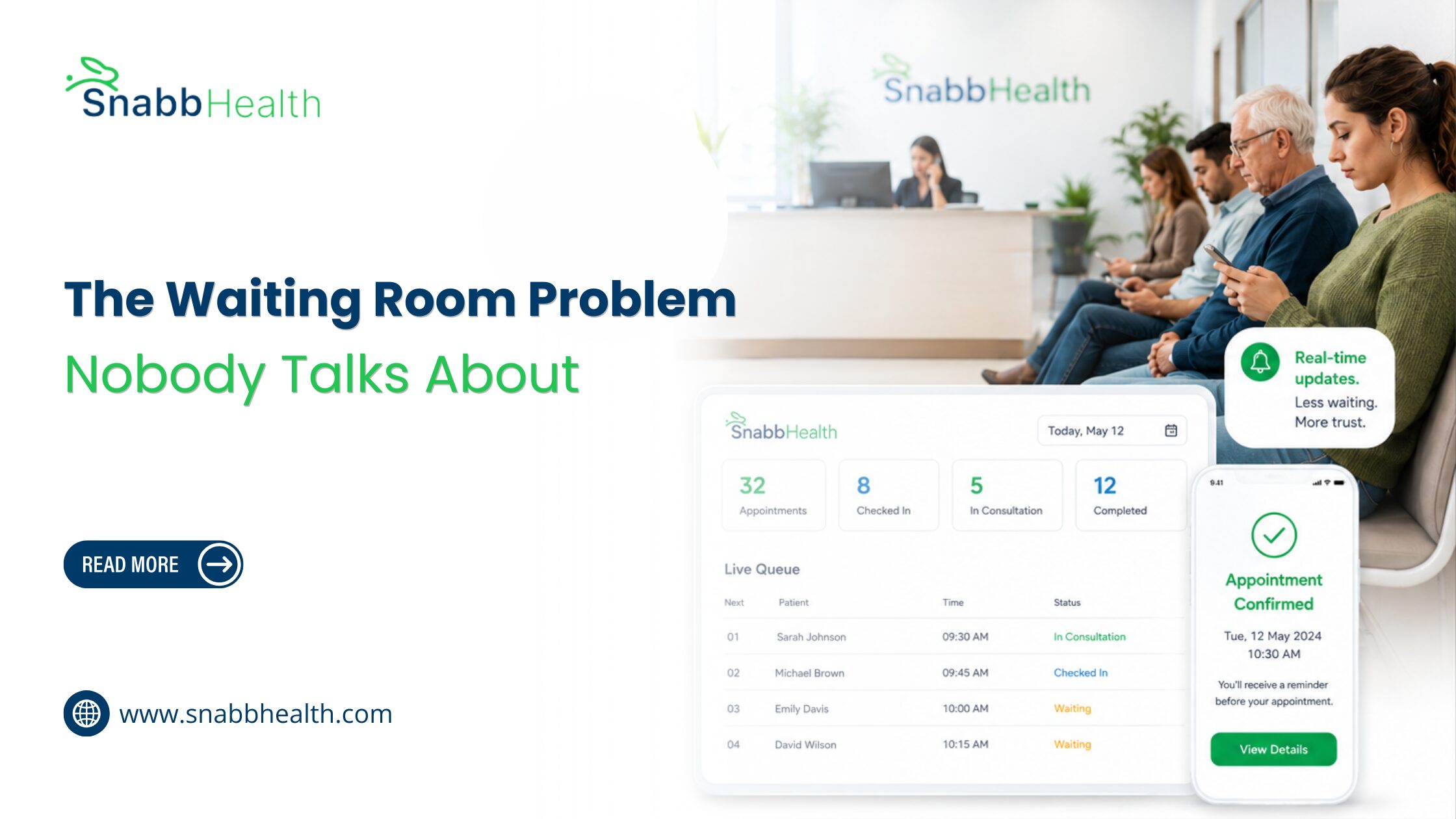
Walk into almost any clinic mid-morning and you can tell within minutes whether it’s running smoothly.
Patients hovering near the reception desk. Front-desk staff juggling three things at once. Someone asking for the third time how long the wait will be. A crowded seating area even though appointments started two hours ago.
These things get written off as “just how healthcare works.” But they’re not inevitable they’re operational. And that distinction matters more than most clinics realize.
Patients Don’t Just Notice the Doctor
Clinics pour enormous energy into treatment quality, expertise, and outcomes. None of that is wrong that’s the actual job.
But patients experience a clinic long before they sit in the consultation room. The booking process. Whether they got a reminder. How check-in felt. How long they waited with no update.
When that part feels chaotic, it colors everything. Even genuinely good medical care can feel worse when it comes wrapped in confusion.
This isn’t a complaint about patients being demanding. It’s just how humans work. When we’re anxious or uncertain, we notice friction we’d otherwise ignore.
The Wait Usually Starts Before the Waiting Room
Most “waiting room problems” aren’t really waiting room problems. They start earlier in the schedule.
One appointment runs long. The next gets pushed. By afternoon, every consultation is 30-40 minutes behind and the front desk is spending most of its time apologizing.
The strange thing is how quickly this becomes normal. Staff start calling it a “busy day” even when it happens every Tuesday and Thursday. Nobody flags it because nobody tracks it it just gets absorbed.
Busy Isn’t the Same as Efficient
There’s a quiet assumption that a packed waiting room means the clinic is doing well. Sometimes that’s true. But a clinic seeing 40 patients smoothly will feel calmer than a clinic seeing 20 patients poorly.
What separates them isn’t volume it’s visibility and coordination. Does the front desk know when a doctor is running behind? Do patients get told, or do they just sit there? Does someone notice the bottleneck early enough to do something about it?
Most clinics have no real answer to those questions. Not because they don’t care, but because the systems aren’t built to surface that information.
Front Desk Work Is Harder Than It Looks
Reception teams carry a disproportionate share of operational stress.
They’re managing appointments, answering calls, handling walk-ins, coordinating with doctors, updating records, and fielding questions from patients who have been waiting longer than expected often simultaneously, often with outdated information.
Without connected systems, a lot of this happens through memory, sticky notes, and back-and-forth conversations that eat time. The work isn’t hard because the staff are inexperienced. It’s hard because the workflow has too many gaps.
Adding another person to the front desk sometimes helps. But if the underlying process is broken, more hands just means more people managing the same mess.
Patients Have Quietly Raised Their Expectations
People now get real-time delivery updates on a burrito. They can reschedule a flight from their phone in 90 seconds.
When they arrive at a clinic and can’t get a straight answer about wait times or have to fill in the same paper form they filled out last year the contrast is jarring. Not infuriating, necessarily. But noticeable.
What’s interesting is that patients can actually tolerate delays quite well when someone communicates with them. It’s the silence that breeds frustration. A simple “the doctor is running about 20 minutes behind” resets expectations and usually diffuses the irritation entirely.
Most clinics underestimate how much that one thing would change how patients feel.
Small Gaps Compound
A single delayed appointment doesn’t stay contained. It ripples into the next slot, into billing, into follow-up scheduling, into how rushed the doctor feels during consultations.
When that happens day after day, the clinic stops operating proactively. It starts reacting. And sustained reactive work is exhausting for everyone involved doctors, staff, and patients alike.
Where Things Are Heading
More clinics are starting to recognize that operational efficiency isn’t a backend concern. It shows up directly in patient retention, reviews, staff turnover, and how the clinic grows.
That’s behind the shift toward connected systems that bring scheduling, reminders, records, and workflow visibility into one place. Not automation for its own sake just fewer unnecessary gaps between the moving parts.
Platforms like SnabbHealth are built around exactly this problem helping clinics run more smoothly without creating new layers of complexity for the teams already stretched thin.
The waiting room will never be perfect. But most of what makes it stressful isn’t unavoidable. It’s fixable if someone’s actually looking at it.