
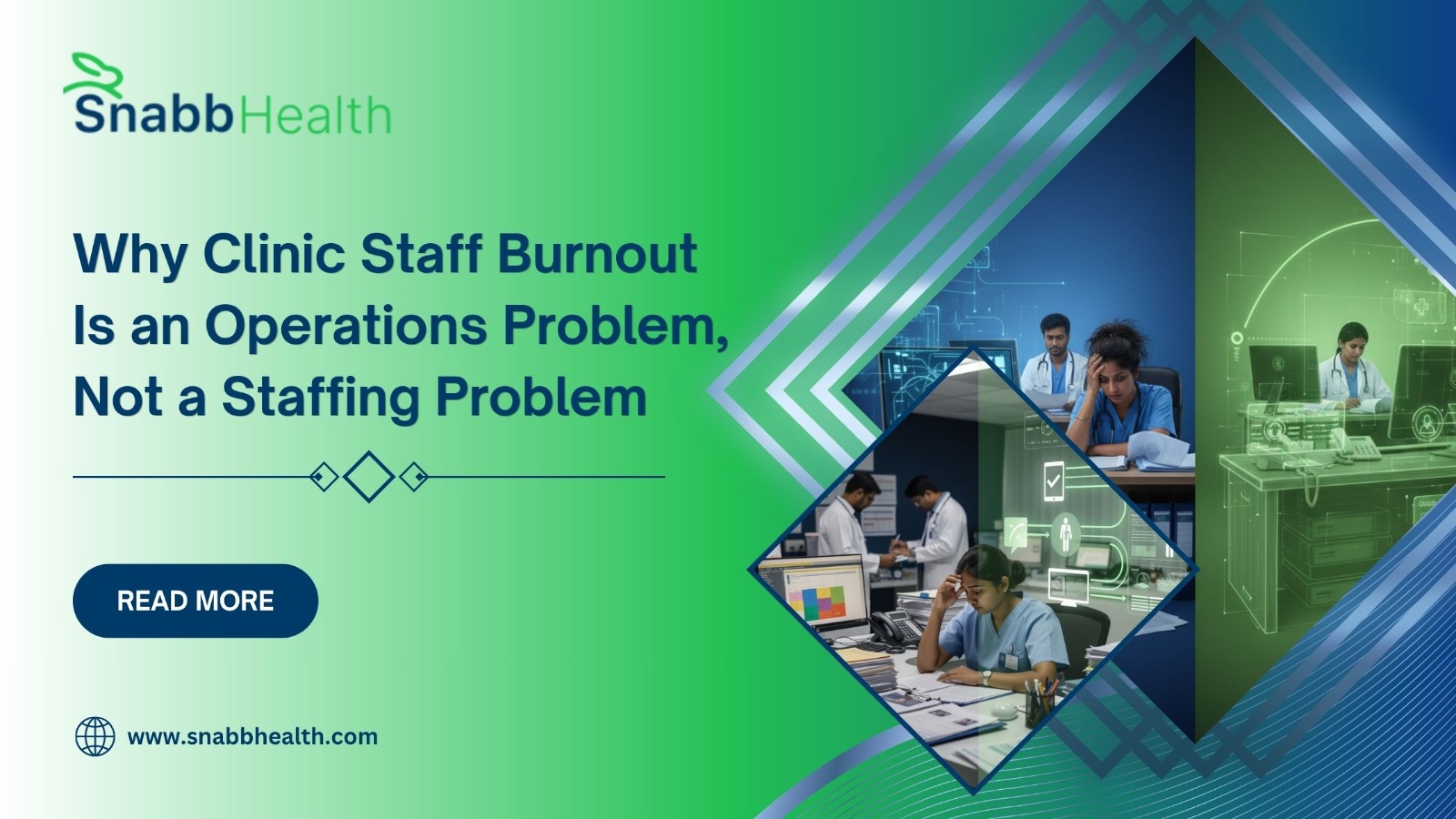
The System Is Busy. But Is It Working Efficiently?
The instant I walk into any clinic, the pace of the clinic is apparent. Front office staff handling line-ups, nurses managing the movement of patients through the system, and doctors going from patient to patient. Burnout is perceived, for the most part, as a staffing issue.
However, oftentimes, the deeper causes of burnout are not due to a lack of staff but how the system functions around the staff.
Clinic staff do more than just see patients, they are also working with many fragmented workflows, bridging gaps in coordination and making up for the inefficiencies that should not have existed in the first place. After a length of time doing this, routine work becomes a constant burden.
What Burnout Actually Looks Like on the Ground
Burnout in clinics rarely comes from one major failure. It builds through repeated, small operational friction points throughout the day.
Staff often deal with:
- Repeated manual data entry across systems
- Constant follow-ups for missing patient information
- Unpredictable patient flow and overcrowding
- Last-minute schedule changes and coordination gaps
- Administrative tasks are taking time away from core responsibilities
Individually, these may seem manageable. Together, they create a work environment where teams are always reacting instead of operating smoothly.
Why Hiring More People Doesn’t Solve It
The immediate response to burnout is often to increase staffing. While this may provide short-term relief, it does not address the root cause.
If the underlying workflows remain inefficient, adding more people simply spreads the same problems across a larger team.
This leads to:
- More coordination complexity
- Higher operational costs
- Continued inefficiencies at scale
- Persistent stress across teams
Without fixing how work flows through the system, burnout continues, just with more people involved.
What Better Operations Look Like
Clinics that successfully reduce burnout focus on improving workflows rather than simply increasing headcount.
When operations are designed well:
- Patient data flows seamlessly across systems
- Scheduling aligns with actual capacity
- Administrative tasks are minimized or automated
- Staff can focus on patient care instead of coordination
The result is not just improved efficiency. It is a more sustainable working environment where teams can operate without constant overload.
A Shift From Effort to Efficiency
The goal is not to make staff work harder. It is to make the system work better.
By reducing unnecessary steps, improving coordination, and connecting workflows, clinics can significantly lower the operational burden on their teams.
This shift changes the nature of work from reactive problem-solving to structured, predictable processes.
How SnabbHeath Can Help
By creating connected systems and streamlined workflows in scheduling, patient matter, and coordination, SnabbHeath helps improve operational efficiency for healthcare providers. When clinics reduce manual effort and close workflow gaps, their staff will feel supported by the system rather than overworked by it.
Addressing burnout is not a matter of increasing the workforce rather, it is building more effective operations to support that workforce.